
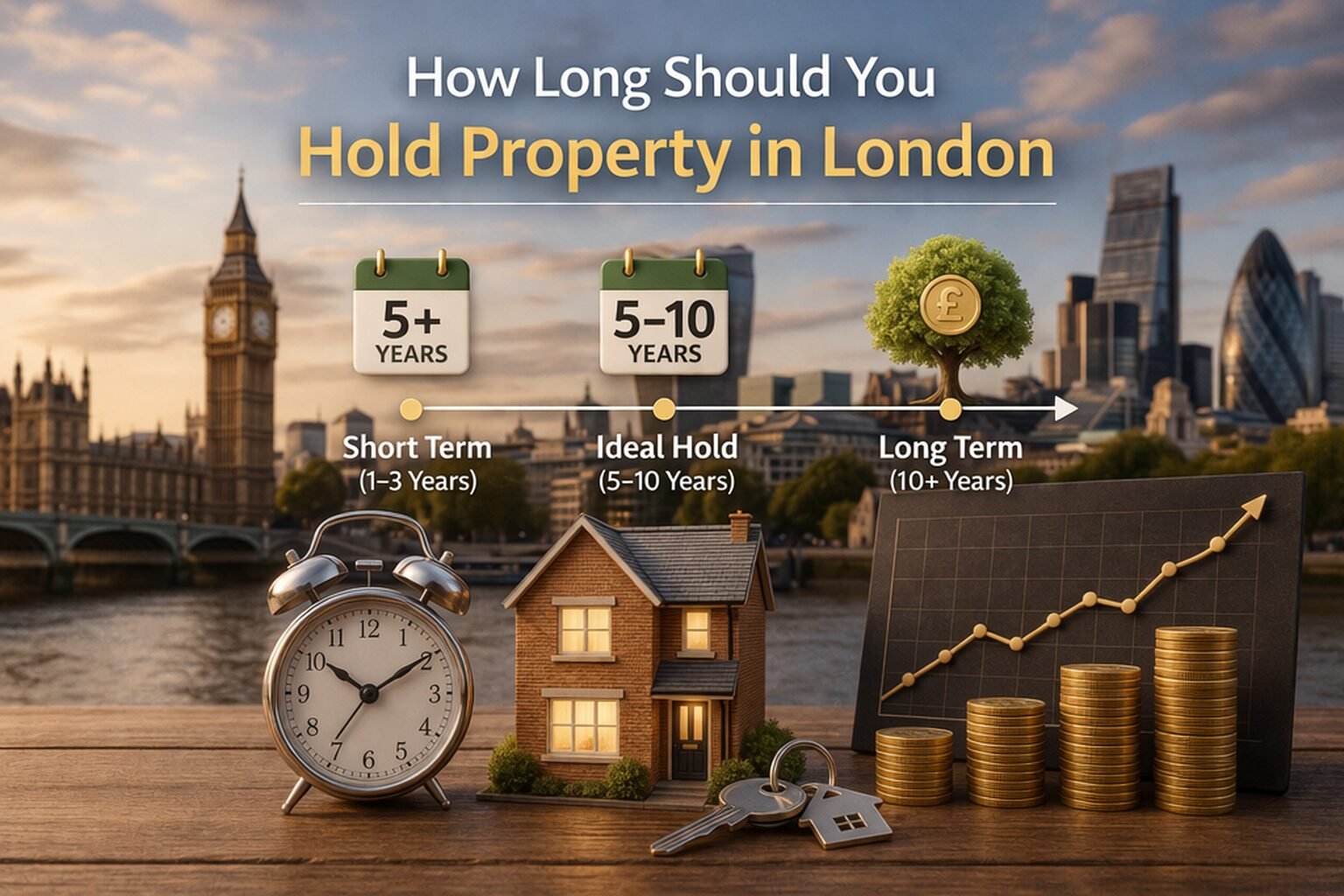
How long should you hold property in London is an important question for investors. Many buyers want quick returns. However, property usually performs better over time. Therefore, understanding the ideal holding period is key to maximizing profit.
How Long Should You Hold Property in London for Best Returns
Most investors benefit from holding property for at least five to ten years. Property markets move in cycles. Therefore, short-term changes can reduce profit if you sell too early.
In addition, long-term ownership allows property values to grow. As a result, investors can benefit from both price increases and rental income. According to the UK House Price Data, long-term growth remains consistent despite short-term fluctuations.
This is why many investors focus on long-term strategies.
How Long Should You Hold Property in London Based on Market Cycles
Property markets do not move in a straight line. There are periods of growth and slower phases. Therefore, holding through different market cycles can improve overall returns.
In addition, selling during a downturn can reduce profit. As a result, patience becomes an important factor in property investment.
According to the London Datastore, property trends often recover after slower periods. Therefore, investors who hold longer are more likely to benefit.
Rental Income Over Time
Rental income plays a major role in long-term investment. Even if prices grow slowly, rental income can provide steady returns. Therefore, holding property allows investors to build income over time.
In addition, rental prices tend to increase gradually. As a result, long-term investors can benefit from rising income.
Buyers exploring London property investment opportunities often focus on both rental income and price growth. This balanced approach improves overall returns.
Short Term vs Long Term Strategy
Some investors aim for short-term gains. They buy and sell quickly to benefit from price increases. However, this strategy carries higher risk.
On the other hand, long-term investors focus on stability. Therefore, they benefit from gradual growth and reduced risk. As a result, long-term holding is often more reliable.
In addition, transaction costs such as taxes and fees can reduce short-term profit. Therefore, holding property longer can help offset these costs.
Factors That Influence Holding Period
Several factors affect how long you should hold property. These include market conditions, personal goals, and financial situation. Therefore, there is no single answer for every investor.
In addition, interest rates and economic conditions can influence timing. According to the Bank of England, changes in borrowing costs can affect property values.
As a result, investors should review their strategy regularly.
Conclusion
In summary, how long should you hold property in London depends on your goals and market conditions. However, long-term ownership usually offers better returns and lower risk. Therefore, investors who stay patient and focus on long-term growth are more likely to succeed.




Join The Discussion