
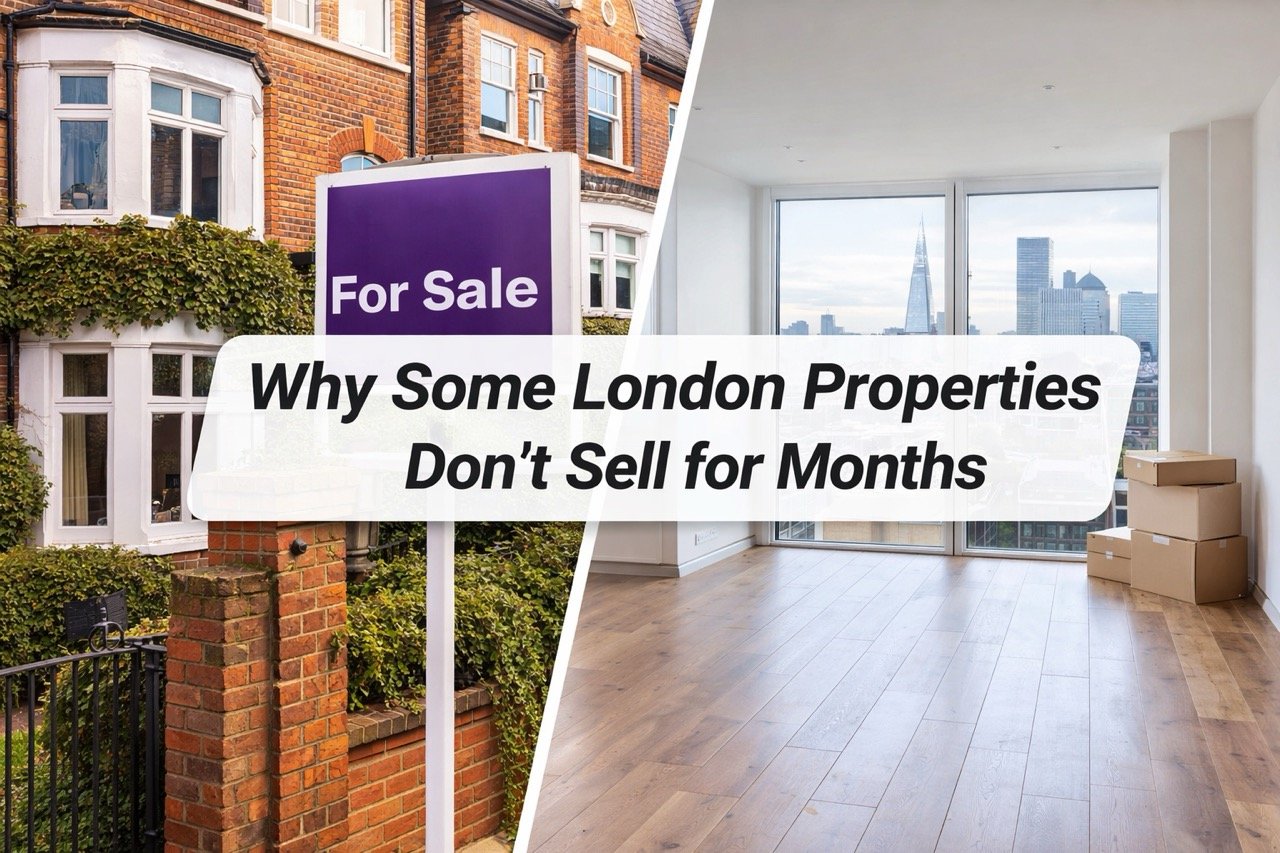
Why some London properties don’t sell is a common question among both buyers and sellers. While demand in London remains strong, not every property attracts immediate interest. As a result, some listings stay on the market for months without serious offers.
Pricing and Market Position
One of the main reasons why some London properties don’t sell is incorrect pricing. If a property enters the market above its real value, buyers quickly lose interest. Therefore, pricing must reflect current conditions rather than past expectations.
In addition, buyers today compare multiple options online. This means overpriced properties become less competitive. As a result, even well-located homes may struggle to attract attention.
Location and Buyer Demand
Location plays a major role in how quickly a property sells. However, not all areas perform equally at all times. For example, properties far from transport links or key amenities may take longer to sell.
On the other hand, areas with strong rental demand often perform better. Buyers who focus on London property investment opportunities tend to prefer locations with consistent tenant demand. This creates faster turnover and stronger interest.
Property Condition and Presentation
Another important factor is condition. Buyers expect properties to be well-presented and ready to move in. If a property requires significant renovation, it may limit the number of interested buyers.
In addition, poor presentation can reduce perceived value. Simple improvements such as lighting, layout, and cleanliness can make a noticeable difference. Therefore, presentation should always support the asking price.
Market Conditions and Timing
Market conditions also influence selling speed. Changes in interest rates can affect buyer confidence and purchasing power. According to the Bank of England, borrowing costs directly impact demand in the housing market.
Furthermore, seasonal trends matter. Some periods naturally attract more buyers, while others slow down activity. As a result, timing can affect how long a property stays on the market.
Competition and Supply
High supply in certain areas can also slow down sales. When many similar properties are available, buyers have more choice. Consequently, sellers must compete on price, condition, and overall appeal.
For broader data on housing supply and price trends, you can review insights from the UK House Price Index. This helps explain why some properties take longer to sell in competitive areas.
Conclusion
In summary, why some London properties don’t sell often comes down to pricing, location, condition, and market timing. While demand remains strong overall, buyers are more selective than before. Therefore, sellers who adapt to market expectations are more likely to achieve faster results.


Join The Discussion