
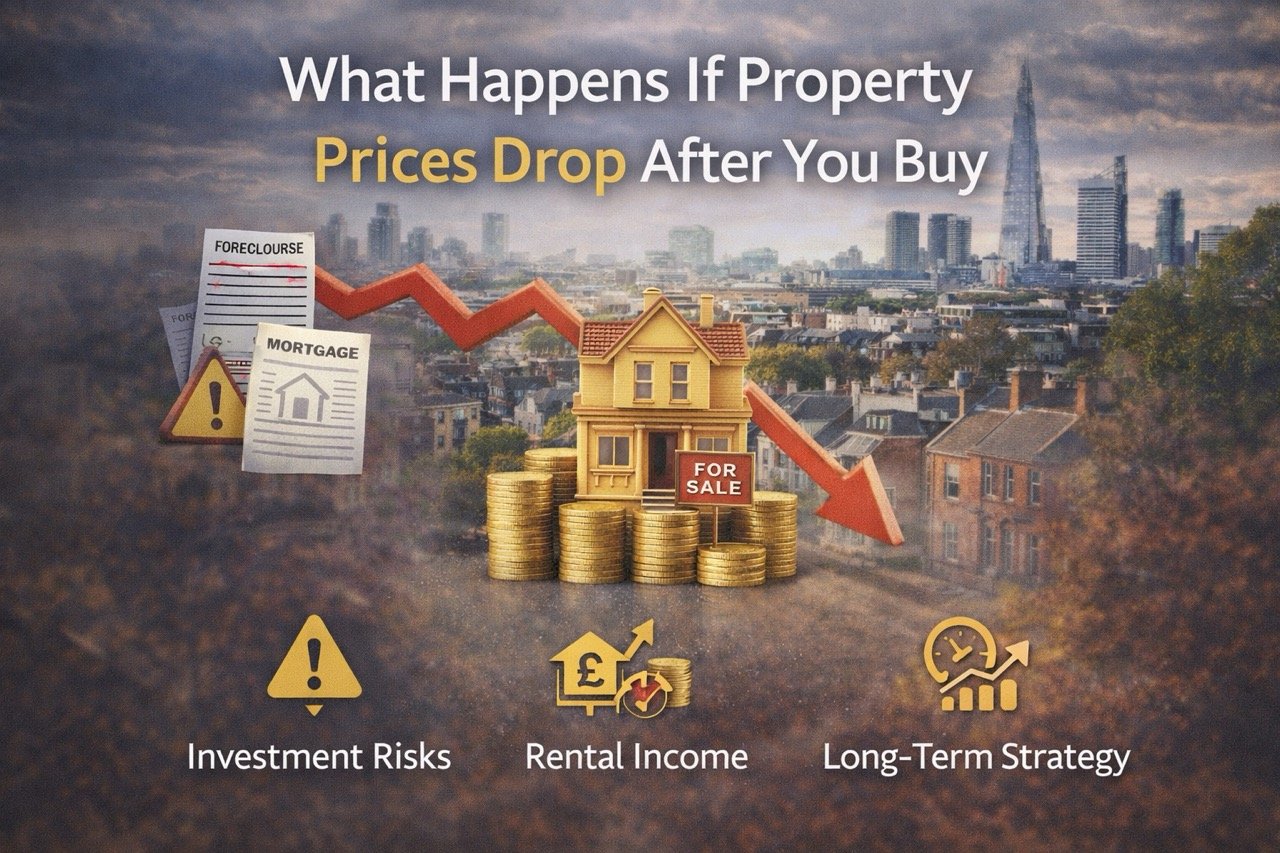
What happens if property prices drop after you buy is a concern for many buyers. Market changes can happen at any time. However, short-term price movements do not always mean a bad investment. Therefore, understanding how property works over time is important.
What Happens If Property Prices Drop After You Buy in the Short Term
Prices can fall after a purchase. This may happen due to economic changes or interest rate increases. Therefore, the value of your property might be lower than your purchase price for a period of time.
However, this does not mean you have lost money unless you sell. Property value on paper can change, but the real outcome depends on long-term decisions. According to the UK House Price Index, prices have shown long-term growth despite short-term drops.
As a result, short-term declines are often part of normal market cycles.
What Happens If Property Prices Drop After You Buy and You Hold Long Term
Holding a property for a longer period can reduce risk. Over time, markets tend to recover and grow. Therefore, buyers who stay invested often benefit from future price increases.
In addition, demand in London remains strong due to limited supply. This supports long-term value. According to the Office for National Statistics, housing demand continues to influence market stability.
As a result, long-term ownership can help balance short-term fluctuations.
Rental Income Can Offset Price Drops
Rental income is another important factor. Even if prices fall, a property can still generate income. Therefore, buyers can cover costs and reduce financial pressure.
In addition, rental demand in London remains high in many areas. Buyers exploring London property investment opportunities often focus on rental potential as well as price growth.
As a result, income can support the investment during slower market periods.
Mortgage and Equity Considerations
If prices drop, equity may decrease. This means the difference between your property value and mortgage balance becomes smaller. Therefore, refinancing options may be limited in the short term.
However, regular mortgage payments can increase equity over time. As a result, the impact of price drops reduces gradually.
Interest rates also affect this situation. According to the Bank of England, borrowing costs influence both prices and affordability. Therefore, monitoring rates is important.
Market Cycles and Timing
Property markets move in cycles. Periods of growth are often followed by slower phases. Therefore, price drops are not unusual.
In addition, trying to time the market perfectly is difficult. Buyers who wait for the lowest point may miss opportunities. As a result, focusing on long-term value is often a better strategy.
Conclusion
In summary, what happens if property prices drop after you buy depends on how you respond. Short-term declines can happen, but long-term growth often follows. Therefore, buyers who plan carefully and hold their investment are more likely to succeed.


Join The Discussion