
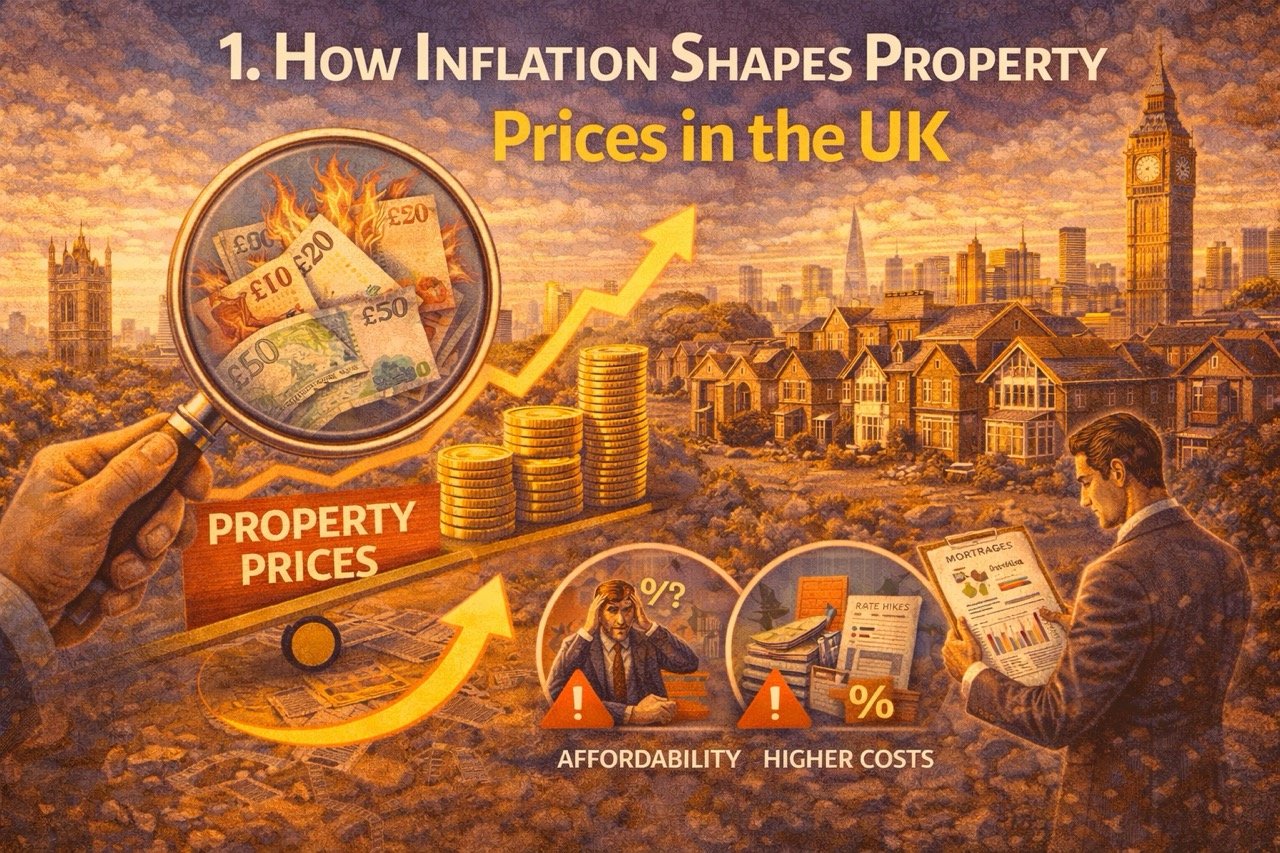
How inflation shapes property prices in the UK is an important topic for buyers and investors. Inflation affects the cost of living, borrowing, and construction. As a result, property prices often move with inflation trends. If you are exploring UK property for sale, understanding inflation can help you make better decisions.
How inflation shapes property prices in the UK explained
Inflation increases the cost of goods and services. This includes building materials and labor. As construction costs rise, developers increase property prices.
In addition, inflation reduces the value of money over time. Because of this, property becomes more attractive as a store of value. Many investors use real estate to protect their wealth. Buyers often compare opportunities using London property search tools to find areas with strong value.
Impact on mortgage rates and affordability
Inflation often leads to higher interest rates. When interest rates rise, mortgage costs increase. This reduces affordability for many buyers.
As a result, demand can slow down in the short term. However, long-term demand often remains stable. Buyers still need housing, and supply remains limited in many areas.
Property as a hedge against inflation
One key reason investors buy property is to protect against inflation. Property values and rental income often rise over time. This helps maintain purchasing power.
In addition, rental prices usually increase during inflation periods. This supports investor returns. Many investors follow UK inflation data to understand how economic changes affect property markets.
Supply and demand balance
Inflation also affects supply. Higher construction costs can slow down new developments. This reduces the number of new properties entering the market.
At the same time, demand remains strong. Because of this imbalance, prices can continue to rise. Investors who understand this dynamic can benefit from long-term growth.
Regional differences in price growth
Not all areas react the same way to inflation. Some regions show stronger price growth due to higher demand. Cities with strong economies often perform better.
In addition, areas with good infrastructure and transport links attract more buyers. Checking listings on UK property platforms can help identify locations with strong demand.
Short-term vs long-term effects
Inflation can create short-term uncertainty. Buyers may delay decisions due to higher costs. However, long-term trends often remain positive.
Over time, property values tend to increase with inflation. Therefore, long-term investors often benefit the most.
Conclusion
How inflation shapes property prices in the UK depends on costs, demand, and market conditions. Inflation can increase prices, reduce affordability, and influence investment strategies.
By understanding these effects, you can make better decisions. Monitor economic trends and compare different locations carefully. This approach will help you navigate the market and achieve stronger investment results.



Join The Discussion