
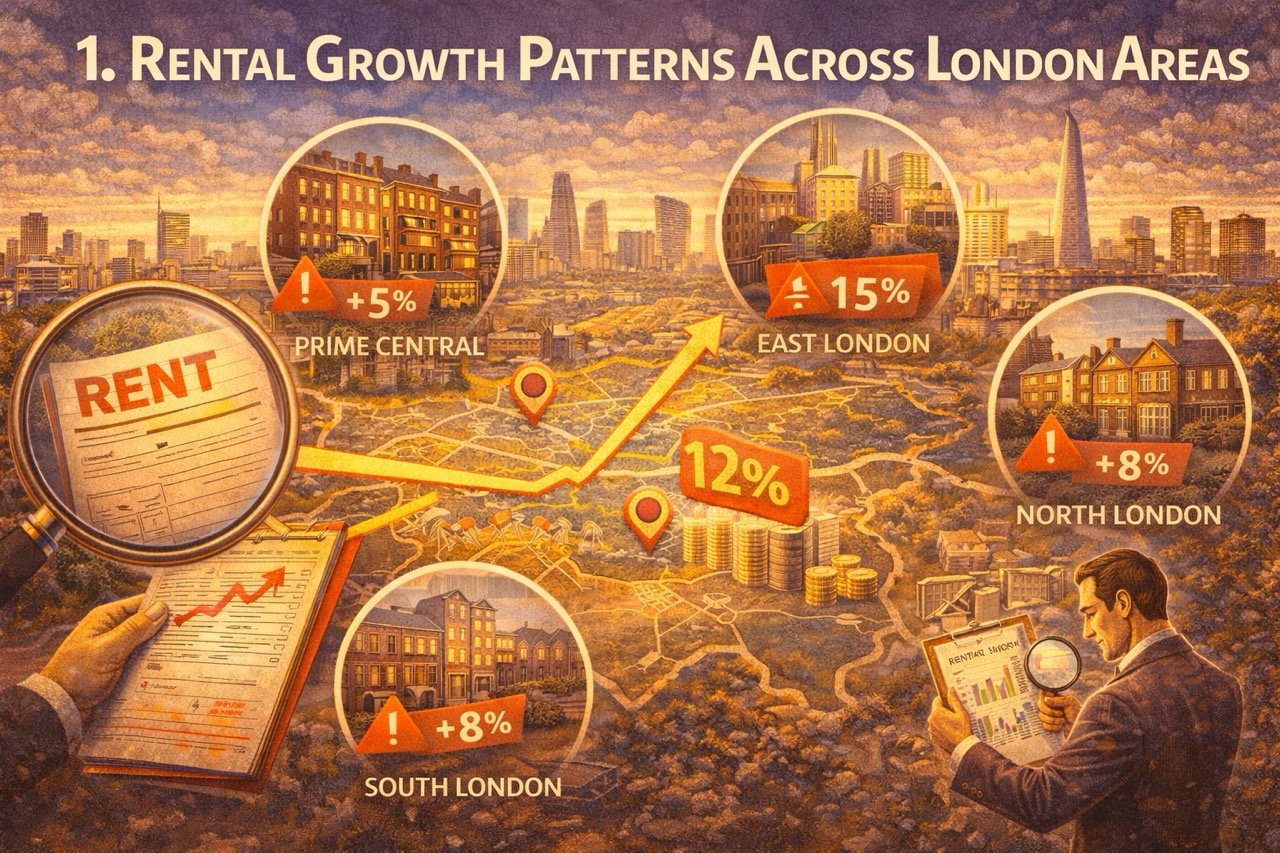
Rental growth patterns across London areas are important for both investors and landlords. Rental income is a key part of property returns. However, not all areas perform the same. Some locations show strong growth, while others remain stable. If you are exploring London buy to let properties, understanding rental trends can help you choose the right area.
Rental growth patterns across London areas explained
Rental growth depends on demand and supply. Areas with high demand and limited supply usually see faster rental increases. In London, this often happens in well-connected locations.
In addition, areas close to transport links attract more tenants. Easy access to central zones increases demand. As a result, rents in these areas tend to rise over time. Many investors use London property search tools to compare rental levels across different locations.
Central vs outer London rental trends
Central London has traditionally been the most expensive area. Rental prices are high due to strong demand. However, growth has slowed in some central locations due to high entry costs.
On the other hand, outer areas have shown stronger growth in recent years. Buyers and tenants look for more space and better value. Because of this, demand has shifted slightly away from central zones.
Impact of lifestyle changes on rental demand
Lifestyle changes have influenced rental growth. Remote work allows tenants to live further from their workplace. As a result, areas with more space and lower costs have become more attractive.
In addition, tenants now look for properties with better living conditions. This includes outdoor space and modern layouts. These preferences have increased demand in certain areas.
Student and professional demand
Different areas attract different tenant groups. Some locations are popular with students, while others attract professionals. This affects rental stability and growth.
Areas near universities often have consistent demand. However, professional areas may offer higher rental income. Therefore, investors should choose based on their strategy.
Tracking rental performance over time
Rental growth is not always constant. It can change based on economic conditions and supply levels. Because of this, investors should track trends regularly.
Many buyers review UK rental market statistics to understand how rents have changed over time. This helps identify areas with strong long-term potential.
Future growth areas
Emerging areas often show the highest rental growth. These locations benefit from regeneration and new infrastructure. As a result, they attract more tenants over time.
Investors who enter early can benefit from rising rents and property values. Checking listings on UK property platforms can help identify these opportunities.
Conclusion
Rental growth patterns across London areas depend on demand, location, and lifestyle trends. Central areas offer stability, while outer areas may provide higher growth.
Before investing, you should analyze rental demand and market data carefully. By choosing the right location, you can maximize rental income and long-term returns.




Join The Discussion