
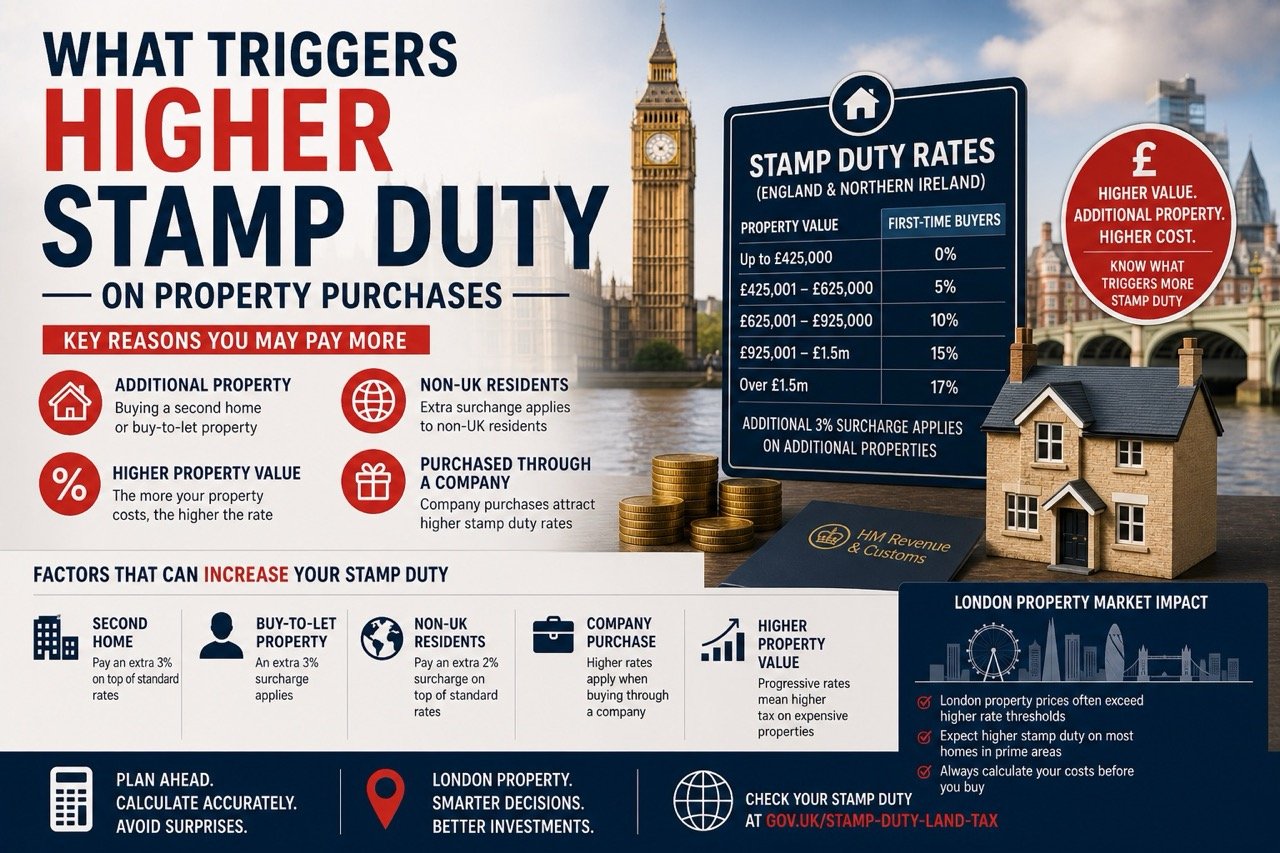
Higher stamp duty UK is something many buyers do not fully understand. At first, the tax may seem simple. However, several factors can increase the amount you pay. Because of this, knowing what triggers higher costs helps you avoid surprises.
What causes higher stamp duty UK
Stamp duty depends on the property price and your situation. Therefore, small changes can lead to higher costs.
In addition, government rules apply different rates in different cases. Because of this, understanding the triggers is essential.
Buyers who follow UK housing supply and demand statistics often combine market insights with cost planning.
Higher stamp duty UK and property price
Crossing tax thresholds
Stamp duty works in bands. Therefore, when a property price crosses a threshold, a higher rate applies to that portion.
Because of this, even a small increase in price can lead to more tax.
For example, if you buy slightly above a threshold, the additional portion is taxed at a higher rate.
Many buyers explore property for sale in London to find properties within specific price ranges.
High value properties
More expensive properties naturally fall into higher tax bands. Therefore, stamp duty increases significantly as the price rises.
Because of this, buyers must carefully calculate total costs before committing.
Higher stamp duty UK for additional properties
Buying a second home
If you already own a property, buying another one usually triggers extra stamp duty.
Therefore, investors and second home buyers pay a surcharge.
Because of this, total purchase costs are higher compared to first time buyers.
Investment properties
Buy to let properties also fall under higher stamp duty rules. Therefore, investors must include these costs in their calculations.
In addition, rental income expectations should be realistic.
Buyers often review London property price trends and data to compare investment opportunities.
Higher stamp duty UK for non residents
Overseas buyers
Non UK residents usually pay an additional surcharge. Therefore, international buyers face higher costs.
Because of this, planning becomes even more important before entering the market.
Financial factors affecting stamp duty
Interest rates and affordability
Interest rates influence overall affordability. Therefore, higher borrowing costs can increase financial pressure.
Because of this, buyers monitor UK interest rates and mortgage updates before purchasing.
Combined cost impact
Stamp duty is part of a larger financial picture. Therefore, buyers must consider all costs together.
Because of this, proper budgeting becomes essential.
How to avoid higher stamp duty UK
Stay within key thresholds
One way to reduce costs is to stay below certain price levels. Therefore, negotiation can help.
Because of this, even small price adjustments can make a difference.
Plan your purchase strategy
Understanding your situation helps reduce tax. Therefore, planning ahead is important.
Buyers who research when is the best time to buy off plan property often improve their timing and cost strategy.
Seek professional advice
Stamp duty rules can be complex. Therefore, professional advice helps avoid mistakes.
Because of this, buyers can make informed decisions.
How smart investors manage higher stamp duty UK
Long term planning
Smart investors include stamp duty in their overall strategy. Therefore, they focus on long term returns rather than short term costs.
Data driven decisions
They rely on data and research. Because of this, they understand the real cost of each deal.
Reviewing search results for London properties helps compare options and total costs.
Final thoughts on higher stamp duty UK
Higher stamp duty UK can significantly affect your investment. However, understanding the triggers helps you plan better.
Therefore, informed buyers avoid unexpected costs and improve their financial outcomes.
Because of this, taking time to learn the rules is essential before buying.

Join The Discussion