
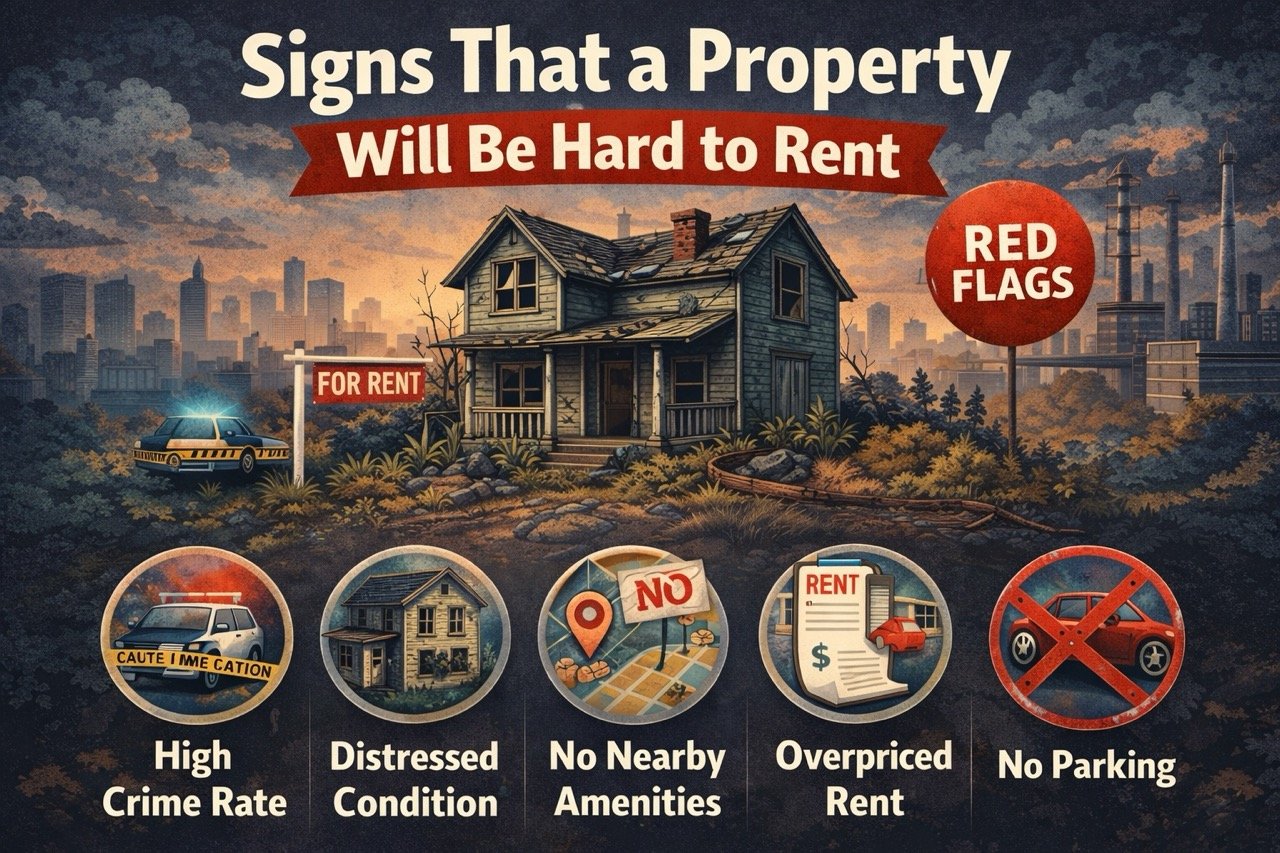
Signs that a property will be hard to rent are important for any investor to understand. Rental income depends on demand. If a property does not attract tenants, your returns will be lower. Therefore, identifying risks early can help you avoid poor investments. If you are reviewing buy to let properties in London, you should always check rental potential before buying.
Signs that a property will be hard to rent explained
One of the main signs is low demand in the area. Properties in locations with fewer tenants may stay empty longer. This reduces rental income and increases risk.
In addition, lack of local amenities can affect demand. Tenants prefer areas with shops, transport, and services nearby. Because of this, location plays a major role. Many investors use London property search tools to compare areas and demand levels.
Poor location and weak connectivity
Properties far from transport links are harder to rent. Tenants want easy access to work and daily activities. Long travel times reduce interest.
As a result, demand in these areas may remain low. Even if the property is modern, location can limit its appeal.
Overpriced rental expectations
Setting the wrong rental price is another issue. If rent is too high compared to similar properties, tenants may choose other options.
Therefore, it is important to compare rental prices carefully. Many investors review UK rental price data to understand realistic pricing.
Low quality or outdated condition
Condition affects tenant interest. Properties with outdated interiors or poor maintenance attract fewer tenants.
In addition, tenants often prefer modern layouts and clean finishes. Because of this, properties that require upgrades may stay vacant longer.
High supply in the area
Too many similar properties can reduce demand. When tenants have many choices, competition increases.
As a result, landlords may need to lower rent to attract tenants. Investors often check listings on UK property platforms to see how many similar properties are available.
Limited target tenant market
Some properties appeal to a small group of tenants. For example, unusual layouts or remote locations may limit interest.
Because of this, finding tenants can take longer. Properties that suit a wider audience usually perform better.
Lack of nearby employment or activity
Areas with fewer job opportunities often have lower rental demand. Tenants prefer locations close to work or business areas.
In addition, areas without active communities may feel less attractive. This can reduce interest over time.
Conclusion
Signs that a property will be hard to rent include poor location, high prices, and weak demand. These factors can reduce rental income and increase vacancy periods.
Before investing, you should analyze the area, condition, and pricing carefully. By understanding these signs, you can choose properties with stronger rental potential and more stable returns.




Join The Discussion