
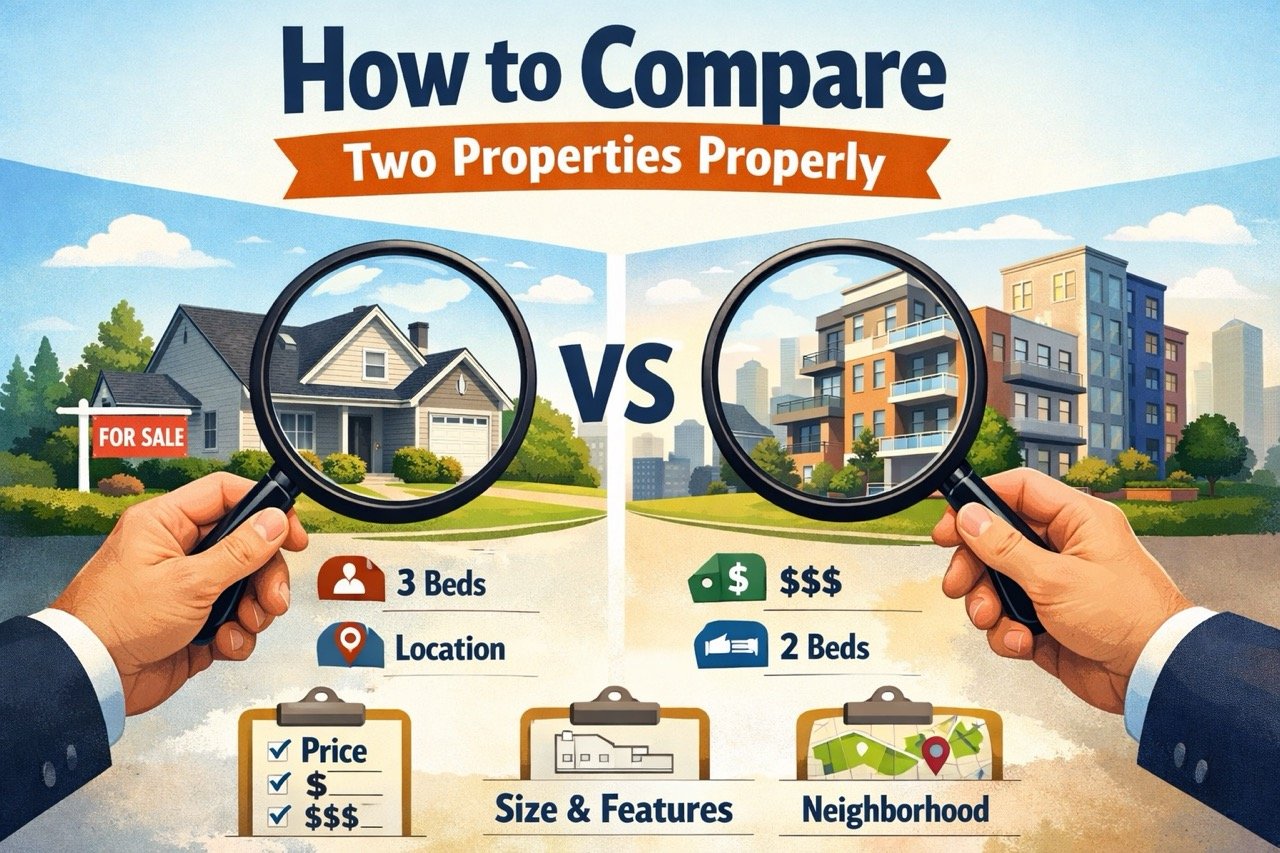
How to compare two properties properly is a key step before making a final decision. Many buyers look at price first. However, a deeper comparison helps you understand real value. If you are reviewing London flats for sale, you should compare multiple factors to avoid choosing the wrong property.
How to compare two properties properly explained
Comparing two properties starts with clear criteria. You should look at size, layout, condition, and location. These factors affect both lifestyle and investment value.
In addition, price alone does not show the full picture. A slightly more expensive property may offer better long-term benefits. Many buyers use London property search tools to compare listings side by side.
Compare location and connectivity
Location is one of the most important factors. Properties in well-connected areas usually have higher demand. Access to transport, schools, and shops adds value.
Therefore, you should compare how easy it is to travel from each property. Even small differences in location can affect long-term growth.
Evaluate property condition and design
Condition plays a major role in value. A newer or recently renovated property may require less maintenance. On the other hand, an older property may need repairs.
In addition, layout and design affect usability. Open layouts and natural light are often more desirable. Because of this, you should assess how comfortable each property feels.
Analyze price per value
Instead of only looking at total price, compare value. Consider what you get for the price. This includes space, features, and location.
If one property offers more value for a similar price, it may be the better choice. Many investors review UK property price data to understand fair pricing in the market.
Consider long-term investment potential
Think about future value. Properties in growing areas often perform better over time. Infrastructure projects and demand trends can increase value.
Because of this, you should research future developments. Buyers often check listings on UK property platforms to compare market trends and identify strong locations.
Check ongoing costs
Ongoing costs can affect your decision. Service charges, maintenance fees, and taxes vary between properties.
Therefore, you should compare these costs carefully. A cheaper property may become more expensive over time due to higher expenses.
Match the property to your goals
Finally, your decision should match your goals. If you are buying for living, focus on comfort and location. If you are investing, focus on returns and demand.
Because of this, the best property depends on your priorities. A clear strategy helps you choose more effectively.
Conclusion
How to compare two properties properly involves more than price. Location, condition, costs, and future value all matter.
By analyzing these factors carefully, you can make a better decision. Comparing properties in detail helps you avoid mistakes and choose the right option with confidence.


Join The Discussion