
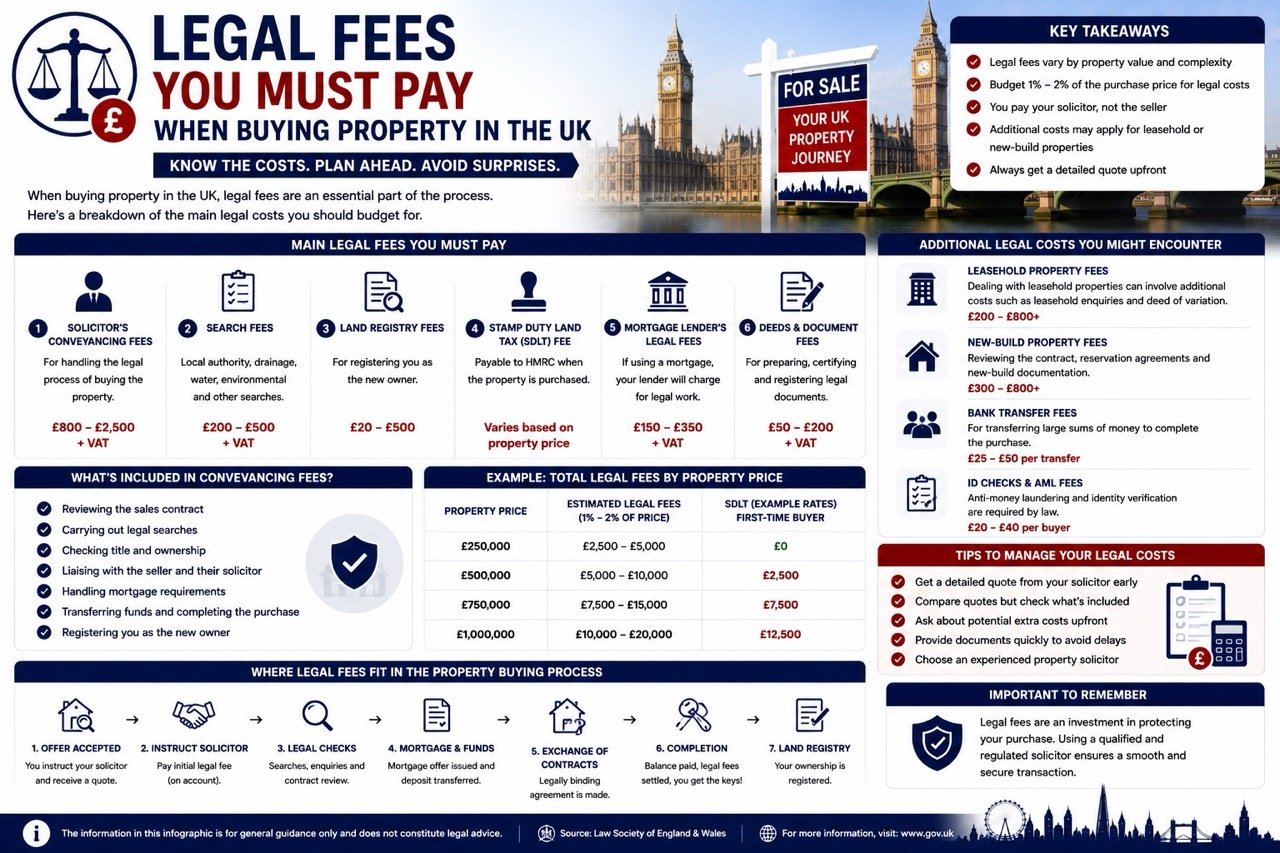
Legal fees buying property UK are an important part of every home purchase. However, many buyers only budget for the deposit and purchase price.
In reality, legal costs include professional fees, searches, registration charges, and bank transfer costs. Therefore, understanding the full amount early can help you avoid unexpected bills.
What Legal Fees Do Property Buyers Pay?
Legal fees cover the work needed to transfer ownership from the seller to the buyer. This process is known as conveyancing.
Your solicitor or licensed conveyancer checks the property title, reviews the contract, orders searches, and manages completion. In addition, they register your ownership after the purchase.
The official GOV.UK guide to buying a home gives buyers a useful overview of the full purchase process.
Solicitor and Conveyancing Fees
Your solicitor’s professional fee will usually form the largest part of your legal bill.
What Does a Conveyancer Do?
A conveyancer normally:
- Reviews the draft contract
- Checks ownership information
- Raises enquiries with the seller
- Orders property searches
- Works with your mortgage lender
- Manages exchange and completion
- Registers your ownership
Because of this, buyers should compare more than the headline price. A low quote may exclude important charges.
The official home buying process from MoneyHelper also explains how conveyancing fits into the wider transaction.
For more detail about contract terms, read Property Contracts UK, 7 Critical Secrets You Must Know.
Property Search Fees
Your solicitor will usually order several property searches before exchange.
Common Property Searches
These often include:
- Local authority searches
- Water and drainage searches
- Environmental searches
- Flood risk searches
- Planning and development checks
These searches reveal issues that may not appear during a viewing. For example, they may show nearby road plans, flood risks, or planning restrictions.
Therefore, skipping searches can expose you to serious problems later.
The RICS consumer guides for property buyers provide additional information about surveys, risks, and professional property checks.
HM Land Registry Fees
After completion, your solicitor registers the property in your name.
The registration charge depends on several factors. These include the property value, application type, and whether the application is completed online.
The HM Land Registry property registration guidance explains how legal ownership is recorded in England and Wales.
You can also read Property Ownership Laws UK to understand the difference between legal ownership types.
Identity and Source of Funds Checks
Solicitors must confirm your identity and review where your money comes from.
Buyers may need to provide:
- Passport or identity card
- Proof of address
- Bank statements
- Evidence of savings
- Proof of property sale proceeds
- Mortgage documentation
- Evidence of inheritance or gifts
These checks form part of anti-money laundering rules. Therefore, overseas buyers should prepare their documents before making an offer.
Bank Transfer and Administrative Charges
Smaller fees can also increase the final bill.
These may include:
- Bank transfer fees
- Electronic identification checks
- Bankruptcy searches
- Land Registry priority searches
- Stamp Duty return submission fees
- File storage charges
Each fee may appear small. However, several charges together can increase your total legal costs.
Because of this, always request an itemised quotation.
Leasehold Property Legal Fees
Leasehold purchases usually involve more legal work than freehold purchases.
Your solicitor may need to review:
- The lease
- Remaining lease length
- Service charge records
- Ground rent terms
- Building insurance
- Management company documents
- Planned major works
- Restrictions on alterations or renting
As a result, legal fees for London apartments may be higher.
You should also review Exchange vs Completion UK to understand when the transaction becomes legally binding.
Mortgage Lender Legal Costs
Buyers using a mortgage may face additional legal charges.
Your solicitor must often act for both you and the lender. Therefore, they need to confirm that the property offers suitable security for the mortgage.
Extra costs may apply when:
- The lender requires additional searches
- The property has title problems
- The solicitor is not on the lender’s approved panel
- The mortgage conditions require extra legal work
The FCA mortgage guidance for consumers explains important points buyers should review before accepting a mortgage.
International buyers can also read UK Mortgage for Overseas Buyers for information about deposits, documentation, and lender requirements.
What Happens If the Purchase Falls Through?
A buyer may still need to pay legal costs even if the purchase does not complete.
You may lose money already spent on:
- Property searches
- Identification checks
- Solicitor work
- Mortgage valuations
- Survey fees
Some conveyancers offer fixed-fee or no-completion arrangements. However, the conditions vary.
Therefore, ask what you must pay if the sale collapses.
You can read Property Chains UK to understand how linked transactions can cause delays or failed purchases.
How Much Should Buyers Budget?
Legal costs depend on the property, ownership type, mortgage, and transaction complexity.
A straightforward freehold purchase may cost less. However, a leasehold apartment, high-value property, or overseas purchase may require more work.
Your quotation should clearly separate:
- Professional legal fees
- Search costs
- Land Registry charges
- Bank transfer fees
- Leasehold supplements
- Mortgage-related work
- Tax submission charges
Because of this, buyers should never compare quotes using only the advertised basic fee.
How to Choose a Solicitor
Price matters, but service quality matters too.
A strong conveyancer should:
- Explain costs clearly
- Respond quickly
- Understand your property type
- Have experience with your lender
- Identify risks before exchange
- Provide regular updates
The Law Society and professional property guidance available through GOV.UK can help buyers understand why qualified legal representation matters.
You should also check whether complaints can be taken to the Legal Ombudsman for legal service complaints.
Common Legal Fee Mistakes
Many buyers:
- Choose the cheapest quote
- Ignore excluded charges
- Forget leasehold supplements
- Delay providing documents
- Fail to budget for searches
- Assume all legal quotes include registration
As a result, the final bill may be much higher than expected.
Instead, ask for a complete written quotation. Then confirm every included and excluded cost.
Final Thoughts on Legal Fees Buying Property UK
Understanding legal fees buying property UK helps buyers plan their full budget before making an offer.
Solicitor fees are only one part of the total. Searches, Land Registry charges, compliance checks, mortgage work, and bank fees also matter.
Therefore, choose an experienced legal professional and request a clear quotation from the beginning. Good legal work can protect you from much larger financial problems later.



Join The Discussion