
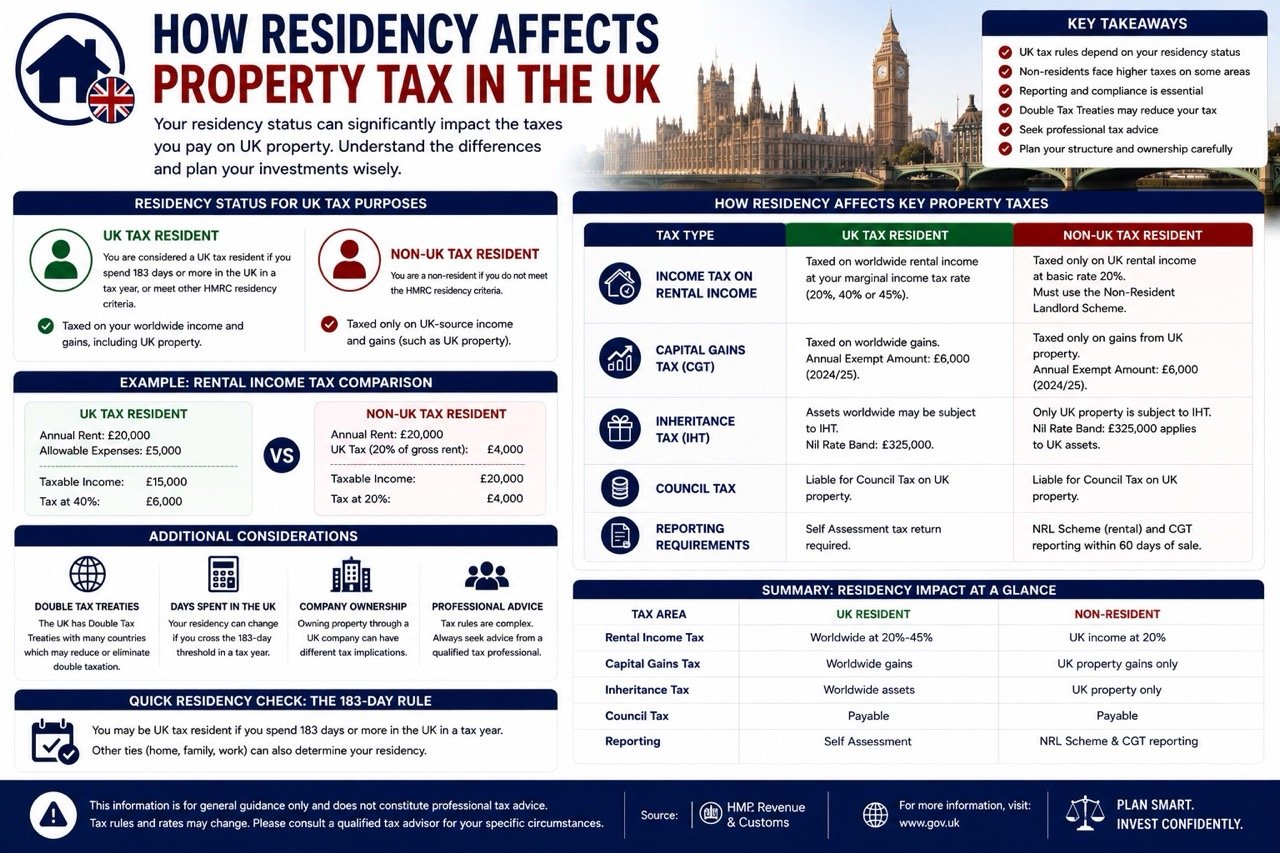
UK property tax residency is one of the most misunderstood aspects of buying property in the United Kingdom. Many buyers believe that owning UK property automatically makes them a UK tax resident. However, this is not the case. Your tax residency can affect the taxes you pay on buying, owning, renting, and selling property. Therefore, understanding the rules before investing is essential.
What Is UK Property Tax Residency?
Tax residency is different from citizenship or nationality. The UK determines tax residency using the Statutory Residence Test (SRT), which considers factors such as the number of days you spend in the UK and your personal connections to the country.
This means:
- You can own UK property without becoming a UK tax resident.
- You can be a UK tax resident without owning property.
- Property ownership alone does not change your residency status.
Because of this, overseas buyers should understand their residency position before completing a purchase.
How Residency Affects Stamp Duty
Tax residency directly affects the amount of Stamp Duty Land Tax (SDLT) you may pay.
Non-Resident Buyers
If you are considered non-resident for SDLT purposes when purchasing residential property in England or Northern Ireland, you normally pay an additional 2% surcharge on top of the standard SDLT rates.
Because of this, two buyers purchasing the same property may pay different amounts of tax depending on their residency status.
You can also review UK House Price Index reports to compare property values before calculating your purchase costs.
How Residency Affects Rental Income Tax
Residency also affects how rental income is taxed.
If You Live Outside the UK
Non-resident landlords still pay UK tax on rental income earned from UK property. However, they may qualify for the Non-Resident Landlord Scheme, allowing rental income to be received without tax being deducted at source if approved by HMRC.
Because of this, overseas investors should understand their reporting obligations before renting out property.
You can also explore what foreign investors should know before buying before entering the UK market.
How Residency Affects Capital Gains Tax
Residency status is also important when selling property.
Non-residents who sell UK property may need to:
- Report the disposal to HMRC
- Calculate any taxable gain
- Pay Capital Gains Tax if applicable
In many cases, the sale must be reported within the required HMRC deadline.
Because of this, investors should plan their exit strategy before purchasing.
Residency Does Not Affect Property Ownership
Many international buyers mistakenly believe they need UK residency to purchase property.
In reality:
- Non-residents can legally buy UK property.
- Overseas ownership is permitted.
- Buying property does not provide residency or visa rights.
Therefore, immigration status and property ownership remain completely separate.
If you want to understand the legal process, you can read do you need a lawyer to buy property in the UK.
Council Tax and Residency
Council Tax is based primarily on the property rather than your tax residency.
However, if a property is used as a second home or remains empty, additional Council Tax charges may apply depending on the local authority.
Because of this, buyers should understand ongoing ownership costs before completing a purchase.
Why Residency Planning Matters
Understanding your residency status can help you:
- Estimate purchase taxes
- Plan rental income efficiently
- Understand Capital Gains Tax obligations
- Avoid unexpected tax liabilities
- Structure your investment more effectively
Because of this, many international investors seek professional tax advice before buying.
You can also read hidden documents every foreign buyer must prepare first before starting the buying process.
Best Locations for Overseas Investors
International buyers continue choosing London because of strong long-term demand and global recognition.
Areas including Stratford, Woolwich and Barking remain popular thanks to regeneration projects and transport improvements.
You can browse property for sale in London to compare available opportunities.
You can also review search results for London properties to compare prices across different boroughs.
Common Residency Mistakes
Many overseas buyers:
- Assume buying property creates UK tax residency
- Forget the 2% SDLT surcharge
- Ignore rental income reporting requirements
- Fail to plan for Capital Gains Tax
- Confuse immigration status with tax residency
Because of this, buyers often face avoidable tax complications.
Instead, buyers should:
- Confirm their residency status
- Understand all property taxes
- Keep accurate financial records
- Seek professional tax advice before investing
Final Thoughts on UK Property Tax Residency
Understanding UK property tax residency helps international buyers make informed financial decisions before purchasing property. Residency affects several important taxes, including Stamp Duty, rental income tax, and Capital Gains Tax, but it does not determine whether you can legally own property in the UK. Therefore, knowing your residency status before buying can reduce unexpected costs and improve long-term investment planning.



Join The Discussion