
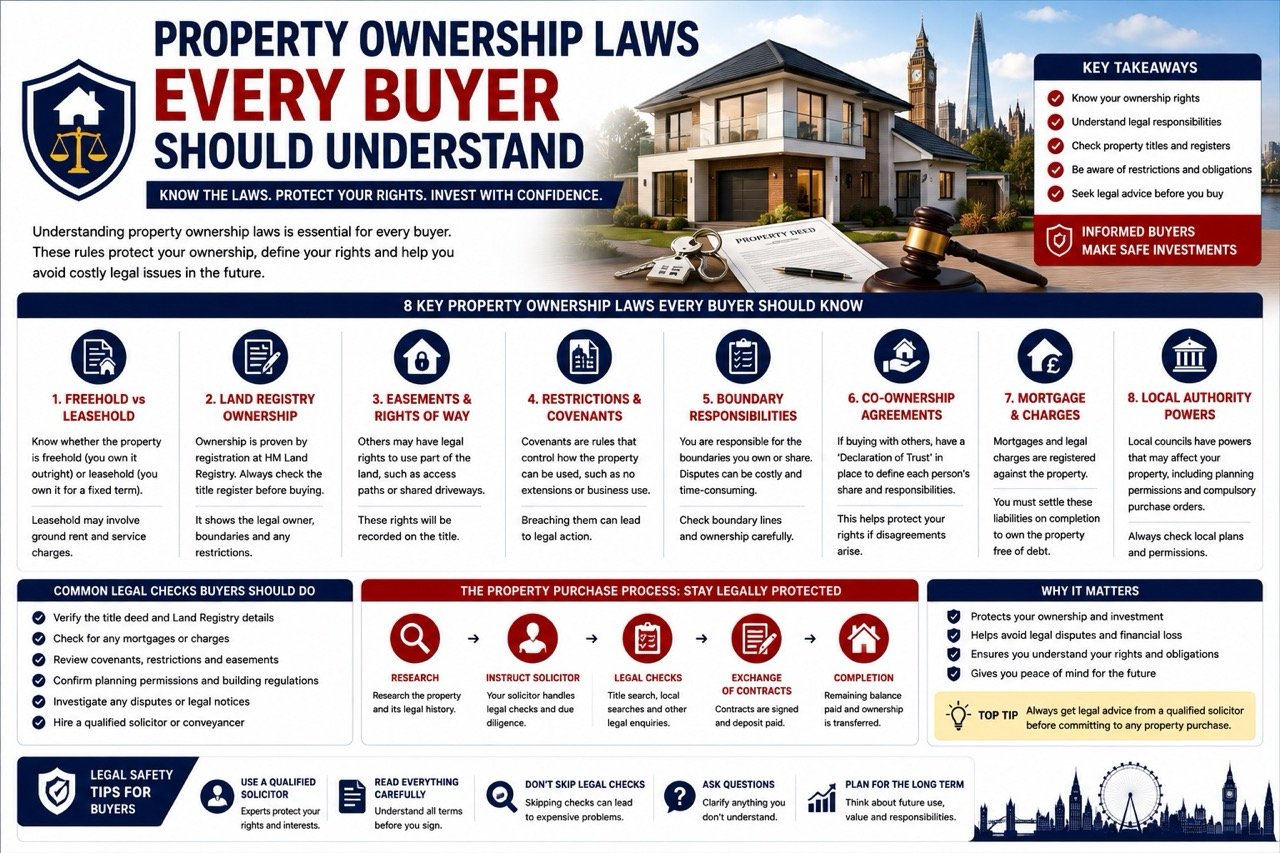
Property ownership laws UK are extremely important for anyone planning to buy real estate in the United Kingdom. Many buyers focus only on the property itself. However, ownership structure and legal rights can affect long term value and future resale potential. Therefore, understanding these laws before purchase is essential.
Property Ownership Laws UK Explained
When buying property in London or areas such as Stratford and Woolwich, ownership laws define your legal rights over the property. Because of this, buyers must understand exactly what type of ownership they are purchasing.
Freehold Ownership UK
Freehold means you own:
- The property
- The land beneath it
This is considered the strongest ownership structure in the UK. Therefore, many buyers prefer freehold houses for long term security.
Freehold owners usually avoid:
- Ground rent
- Lease extensions
- Certain management restrictions
However, freehold properties in central London are often more expensive because of limited supply.
Leasehold Ownership Laws UK
Leasehold is very common in apartments across London. However, many international buyers misunderstand leasehold ownership.
What Leasehold Means
With leasehold ownership:
- You own the property for a fixed number of years
- The land remains owned by the freeholder
Because of this, the remaining lease length becomes very important.
Why Short Leases Create Problems
Short leases can:
- Reduce property value
- Make mortgages harder to obtain
- Create expensive extension costs
Therefore, buyers should carefully check remaining lease years before purchasing.
If you want to understand legal processes more clearly, you can read do you need a lawyer to buy property in the UK.
Joint Ownership Laws UK
Many buyers purchase property together. Therefore, understanding joint ownership structures is critical.
Joint Tenants
Joint tenants own the property equally. If one owner dies, ownership automatically transfers to the other owner.
Tenants in Common
Tenants in common allow different ownership shares. For example:
- 50/50 ownership
- 70/30 ownership
Because of this, many investors and families prefer this structure for flexibility.
Property Ownership Rights Buyers Should Know
Ownership laws also define:
- Rights of access
- Boundaries
- Maintenance obligations
- Shared areas
- Lease restrictions
Therefore, reviewing title documents carefully is essential before exchange.
You can also review hidden documents every foreign buyer must prepare first to understand common legal requirements.
Foreign Ownership Laws in the UK
Foreign buyers can legally purchase property in the UK. There are currently no nationality restrictions on ownership. Because of this, London remains highly attractive for international investors.
However, overseas buyers usually face:
- Additional stamp duty
- Stricter source of funds checks
- Larger mortgage deposit requirements
You can also explore what foreign investors should know before buying before entering the UK market.
Property Ownership Laws UK and Legal Risks
Ownership laws also affect future legal risks. Some properties may include:
- Boundary disputes
- Shared access rights
- Service charge obligations
- Restrictive covenants
Because of this, solicitors conduct detailed legal searches before completion.
You should also monitor UK interest rates and mortgage updates because financing rules can affect ownership affordability.
Why Ownership Structure Affects Property Value
Ownership structure directly impacts resale value and mortgage availability.
For example:
- Freehold properties usually attract stronger demand
- Leasehold properties with short leases may become difficult to sell
Therefore, understanding ownership laws protects long term investment value.
You can browse property for sale in London to compare different property types and ownership structures.
In addition, reviewing search results for London properties helps buyers compare market opportunities more effectively.
Common Mistakes Buyers Make
Many buyers:
- Ignore lease length
- Do not understand service charges
- Fail to review ownership restrictions
- Skip legal advice
Because of this, they often face expensive surprises later.
Instead, buyers should:
- Review title documents carefully
- Ask detailed legal questions
- Understand ownership rights fully
- Check lease conditions before exchange
Final Thoughts on Property Ownership Laws UK
Understanding property ownership laws UK gives buyers stronger protection and better long term decision making. Ownership structure affects value, legal rights, financing, and resale potential. Therefore, buyers should always review ownership details carefully before proceeding with a purchase.
A well informed buyer usually avoids costly legal problems and makes safer property decisions in the long term.


Join The Discussion